
Pen pals for children who are still learning to write
A mother wrote to me last week about her nine year old daughter. She wanted her to try Stamplo, and she explained that her daughter has additional needs and is still learning to read and write, and then she asked whether there was some way her daughter could speak her letters instead of typing them. She also mentioned, almost as an aside, that what her daughter really loves is telling made up stories with pictures, and she wondered whether Stamplo was text only.
I have been thinking about that email ever since, partly because the answers were better than she was expecting, and partly because it made me realise how much of the way we talk about pen pals quietly assumes a child who can already sit down and write a page unaided. That assumption is baked into the phrase itself, and it leaves out a reasonable number of children who would love a pen pal and who are perfectly capable of having one.
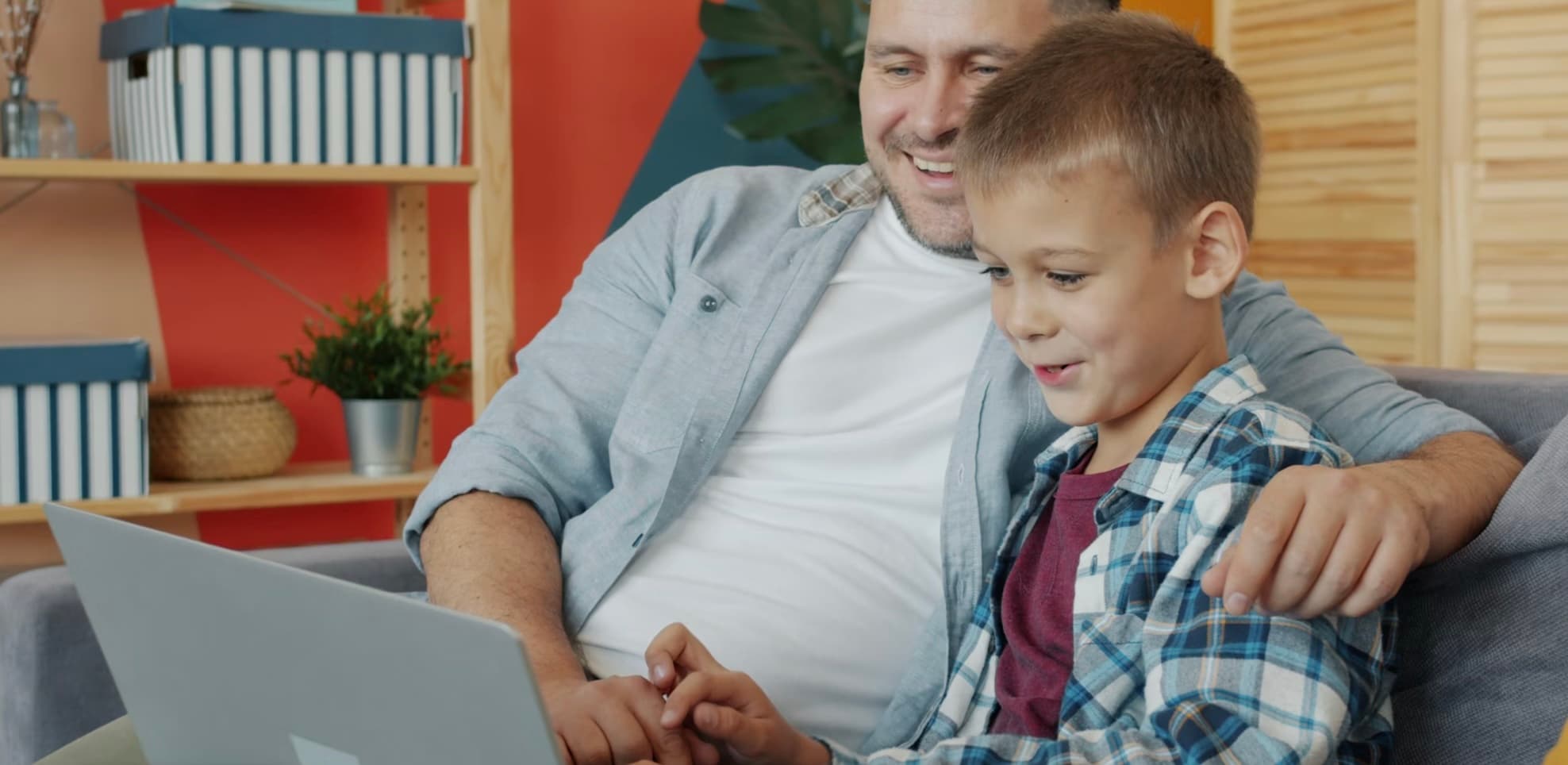
Your child can speak their letters
I will be straight about this, because it matters more than a reassuring answer would. Stamplo does not have a dictation button of its own yet, and it is on my list rather than in the product. What I can tell you is that you very likely do not need one, because the box a child writes their letter in is an ordinary text box, which means the dictation your device already has types directly into it exactly as it would into a message or a school essay.
On an iPad or an iPhone your child taps into the letter first and then taps the microphone key on the keyboard and simply talks, and on an Android tablet it is the microphone on the Gboard keyboard, and on a Windows laptop it is the Windows key and H pressed together. The one thing genuinely worth practising is the tapping into the letter box before speaking, because that is the step children skip and it is the step that decides whether the words land in the right place or nowhere at all.
What surprised me when I first watched a child do this is how different the letters sound. A child who is labouring over spelling writes in short flat sentences, because every word costs something, and the same child speaking aloud will run on happily for a paragraph and sound completely like themselves. The writing was never the thing they wanted to say. It was the toll they had to pay to say it.
Pictures are not decoration
The second question in that email was whether Stamplo is text only, and the answer is no, because a child can attach a picture to any letter they send. It can be a photograph of something they drew on paper, which is what most children do, or a drawing made on a tablet and saved as a file. It needs to be a JPEG, PNG or WebP and under five megabytes, which any photo taken on a phone comfortably is.
For a child who tells stories in pictures this changes what a letter is allowed to be. The drawing can carry the story and a line or two of words underneath can carry the rest, and that is a complete letter, not a lesser version of one. I would rather receive four sentences and a drawing of a dragon than a tidy paragraph a child did not want to write, and so, in my experience, would the child at the other end.
There are two settings you will want to know about, and I should warn you that both of them start switched off when you first add a child, which catches people out. In your parent dashboard you open your child's profile and you will find one called Can send images and another called Can receive images, and you want both of them, because the first is what lets your child send drawings and the second is what lets their pen pals send pictures back. Every image passes through you for approval before it goes anywhere in either direction, so nothing reaches your child and nothing leaves them without you having seen it first. The only part outside your control is that the pen pal's own parent has to have allowed pictures on their side as well, so if the camera button does not appear for one particular friend, that is usually the reason.
Short letters are welcome here
This is the worry I would have in a parent's position, and it is the one nobody asks about directly. If my child can only manage three lines, is the platform going to make her feel bad about it, and is the child at the other end going to be disappointed.
Stamplo does gently encourage a fuller letter, and there is a small meter on the writing screen that notices whether a letter has a few words, some detail, and a question in it. If a letter is very short it will show a note saying a pen pal would love to hear more. I want to be completely clear about what happens next, because it is the part that matters: the note is a nudge and never a block, and it tells the child in as many words that if they are happy with it then that is okay too, and there is a button right there to send it exactly as it is. A three line letter goes through. A letter that is mostly a drawing goes through.
There is also a button on the writing screen that says Need an idea, which offers a prompt when a child is stuck at the beginning, and for some children the beginning is the whole of the difficulty. It is worth showing them where it is before they need it, because a child who is already frustrated will not go looking.
Why slowness helps rather than hurts
Here is the thing I did not expect when I started building this, and it is the reason I think a pen pal suits a child who works slowly better than almost anything else online. On a messaging app the other person is present. They can see the three dots while you type, and they know when you have read their message, and they are waiting, and all of that pressure lands hardest on the child who needs the longest to find their words. Speed is the whole grammar of those apps and a slow child is permanently behind in them.
A letter removes every one of those signals. Nobody sees you composing, nobody knows how many times you started again, and nobody is sitting there waiting while you decide what you meant. A letter that took a child four evenings and a lot of help arrives looking exactly like a letter that took twenty minutes, which is a kind of privacy that fast messaging simply cannot offer. I wrote more about that in a piece on why fast messaging overwhelms children, and the argument holds even more strongly for a child who is still learning the mechanics of writing.
The delay is deliberate for everyone, and we do not guarantee replies or promise a fast one, which I have explained at more length elsewhere. For most children that slowness is a lesson in patience. For a child who needs time, it is simply the thing that makes taking part possible at all.
What we do not do yet
I would rather tell you the gaps than have you find them in week two. There is no dictation button inside Stamplo, so you are relying on the one your device provides, and while that works well it is one more thing to teach. There is nothing that reads an incoming letter aloud either, which means a child who can speak a letter more easily than they can write one may still need a hand reading the reply, and for now that hand is yours or a screen reader on the device. Both of these are things I want to build, and an email from a parent is what moves them up the list, which is genuinely how this one got written.
If you are deciding whether it is worth trying
The question underneath all of this is usually not really about features. It is whether a child who finds writing hard is going to end up feeling like they failed at something that was supposed to be fun, and that is a fair thing to be careful about, because plenty of well meant activities do exactly that to children.
What I would say is that a pen pal is one of the few things where the bar is set by the person receiving it, and children set that bar generously. A child who gets a letter with a dragon on it and four sentences underneath does not grade it. They look at the dragon, and then they go and find a pen, because somebody in another country made something for them and that is an extraordinary thing to be eight or nine years old and hold in your hands.
A pen pal your child can speak, draw, or write
Stamplo is a parent-supervised pen pal platform for children aged 7–14. No feeds, no algorithms, no notifications. Every letter and every picture is approved by parents on both sides before delivery.
Start Free — Create Your Family Account