
How to Find a Pen Pal for Your Child
Pen pals give children a reason to write with purpose and someone real to write to. Regular letters help children build vocabulary, organise their thoughts and develop empathy for people whose daily lives look very different from their own.
This guide walks you through finding a safe pen pal for your child step by step, covering what to look for in a programme, the safety checks that matter and how to help your child write their first letter.
How do you find a pen pal for your child?
To find a pen pal for your child, choose a route where parents stay in control, such as a school exchange programme or a supervised platform like Stamplo, check that adults are identity verified and that every letter is approved by both families, and then set up the account yourself so your child can simply write.
Decide together what kind of pen pal your child wants
Talk about whether they would love a friend in another country, someone who shares a hobby, or a child learning the same language, because a shared starting point makes the first letters much easier to write.
Choose a parent-controlled route
School exchange programmes, home education networks and supervised digital platforms all keep an adult in the loop. Avoid open chat apps, public forums and anywhere a child can sign up alone with just an email address.
Check the safety basics before you join
Look for parent-held accounts, identity verification for adults, approval of every letter before delivery, and no sharing of home addresses. The checklist further down this page covers each one.
Set up the account yourself
On a well designed service the parent registers and verifies, and the child only ever sees the writing side. On Stamplo you create the family account, complete a one time ID check and approve each connection.
Help with the first letter, then stay involved
First letters are hard for every child, so suggest easy openers like pets, school and favourite games, and keep reading letters together as the friendship grows.
What Are Pen Pals?
A pen pal is someone you exchange letters with regularly. Traditionally this meant posting letters through the mail, often between children living in different cities or countries.
Children write about everyday life: school, hobbies, favourite books, pets or local traditions. Over time these exchanges can grow into genuine friendships built on curiosity and kindness.
Schools have used pen pals for decades to help children learn about the world beyond their own community. Even conversations about daily life can spark curiosity about another place, culture or language.
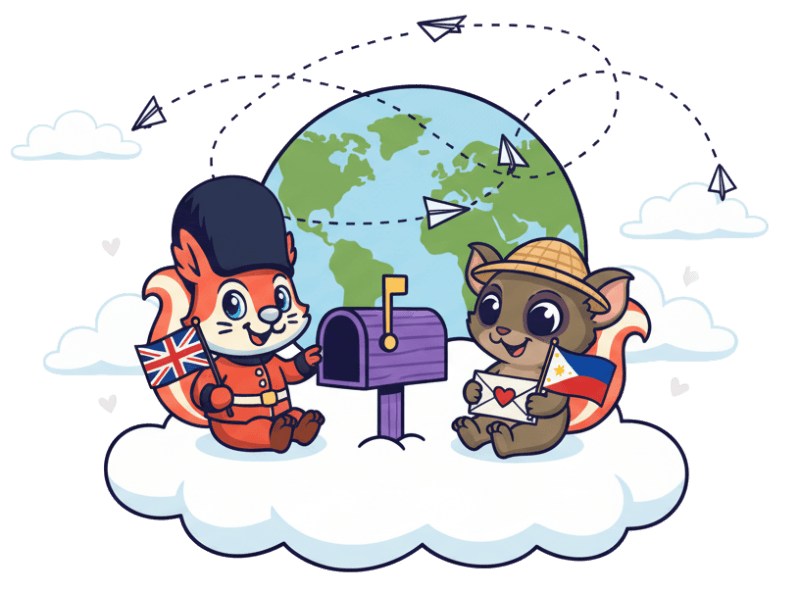
Why Pen Pals Are Good for Children
Pen pal friendships are valuable because they slow communication down. Rather than quick messages or emojis, children take time to think about what they want to say. That pause encourages reflection, empathy and real curiosity about another person's life.
Writing and communication
Writing letters encourages children to organise their thoughts and express themselves clearly and confidently. Skills that go far beyond the page.
Cultural curiosity
A conversation about school, food or favourite games can spark genuine curiosity about another child's culture, language or traditions.
Real friendships
Pen pal connections often grow into genuine friendships built on curiosity and kindness, reaching beyond a child's usual school or local circle.
A slower pace
No instant replies, no pressure to respond immediately. Once both parents approve a letter, it arrives after a short delay — like real post. Children have time to write thoughtfully and conversations feel more meaningful for it.
Many parents find pen pals give children a healthier relationship with technology. One that focuses on creativity and connection rather than constant notifications.
Are Pen Pals Safe for Kids?
Safety is the first question most parents have about pen pals online. Traditional programmes often required families to share home addresses, and most parents aren't comfortable with that today.
Modern platforms can remove these risks by placing parents in control of communication and limiting what information children share. When considering a pen pal platform for your child, look for services that include:
How Digital Pen Pals Work Today
Many families still love the idea of traditional pen pals, but physical letters are slow and often mean sharing home addresses. Digital platforms keep the spirit of letter writing while removing those risks.
No home addresses
Traditional pen pal programmes often require families to share home addresses. Digital platforms remove that risk entirely. Children connect without sharing personal contact details.
Parents stay involved
Children exchange messages online while parents review and approve every connection and every letter before it is delivered.
Calm by design
The best platforms encourage meaningful letters rather than quick chat-style replies. On Stamplo, approved letters arrive after a short delay because waiting is part of what makes receiving a letter feel special.
Where in the world could your child write to?
Explore the countries children write from, including surprising facts, everyday life, and what a pen pal there might tell you about.
Frequently Asked Questions
How do I find a pen pal for my child?▾
Choose a route where parents stay in control, such as a school exchange programme or a supervised platform like Stamplo, check that adults are identity verified and every letter is approved by both families before delivery, then set up the account yourself so your child can focus on writing.
How old does my child need to be to have a pen pal on Stamplo?▾
Stamplo is designed for children aged 7 to 14. Parents create the account and every connection and every letter is approved by a parent before it is delivered.
Is Stamplo free for families?▾
The core service is free. Stamplo Premium is £3.99 per month and adds a choice of paper designs and writing colours for letters. You can cancel at any time with no commitment.
How does the parental approval process work?▾
Both parents must approve a connection before it starts. When your child writes a letter, you review and approve it first. The other child's parent then approves it before it reaches their child. Neither side receives anything without both parents saying yes — Stamplo calls this the Four-Eyes Check.
Can my child write to children in any country?▾
Stamplo currently has families from 81 countries. Your child can connect with any child where both sets of parents approve the match.
What happens if I want to stop?▾
You can delete your account from the parent dashboard at any time. All associated data — including your child's profile, letters, and any attached images — is permanently deleted within 30 days.
Is Stamplo compliant with UK children's online safety standards?▾
Yes. Stamplo is registered with the ICO (registration number ZB927463) and operates in line with the ICO Children's Code (Age Appropriate Design Code). Stamplo does not track children, show advertising, or build profiles of them. You can read more in our Privacy Policy.
Do I need to share my home address?▾
No. Stamplo is fully digital and no home addresses are ever shared or required. Children write and receive letters online without any personal contact details changing hands.