
Planning a screen free summer your children will not resent
My daughters make holiday friends easily, and just as easily they lose them. Last summer in Mallorca they fell in with the children of an Irish family who were staying at the same place, and within a day or two the lot of them were inseparable, the way children are when a whole week stretches out in front of them with nothing to do but swim and stay up too late. We swapped details on the last day, all of us meaning it, and then somewhere between the airport and getting home those details were lost. Addresses get lost and stamps need buying, and a friendship that had felt completely real on the Friday had quietly gone by the following week. The girls were genuinely upset about it, and so, if I am honest, was I.
Letters used to be the thing that held it together. A generation ago a friendship made by a pool in August could survive on a folded sheet of paper posted in September, and then another one in October, and the whole thing was carried through a long winter by two children who had each decided the other one was worth the effort of writing to. Plenty of those friendships still faded in the end, but they faded slowly, and the slowness was part of what made them feel like they mattered while they lasted.
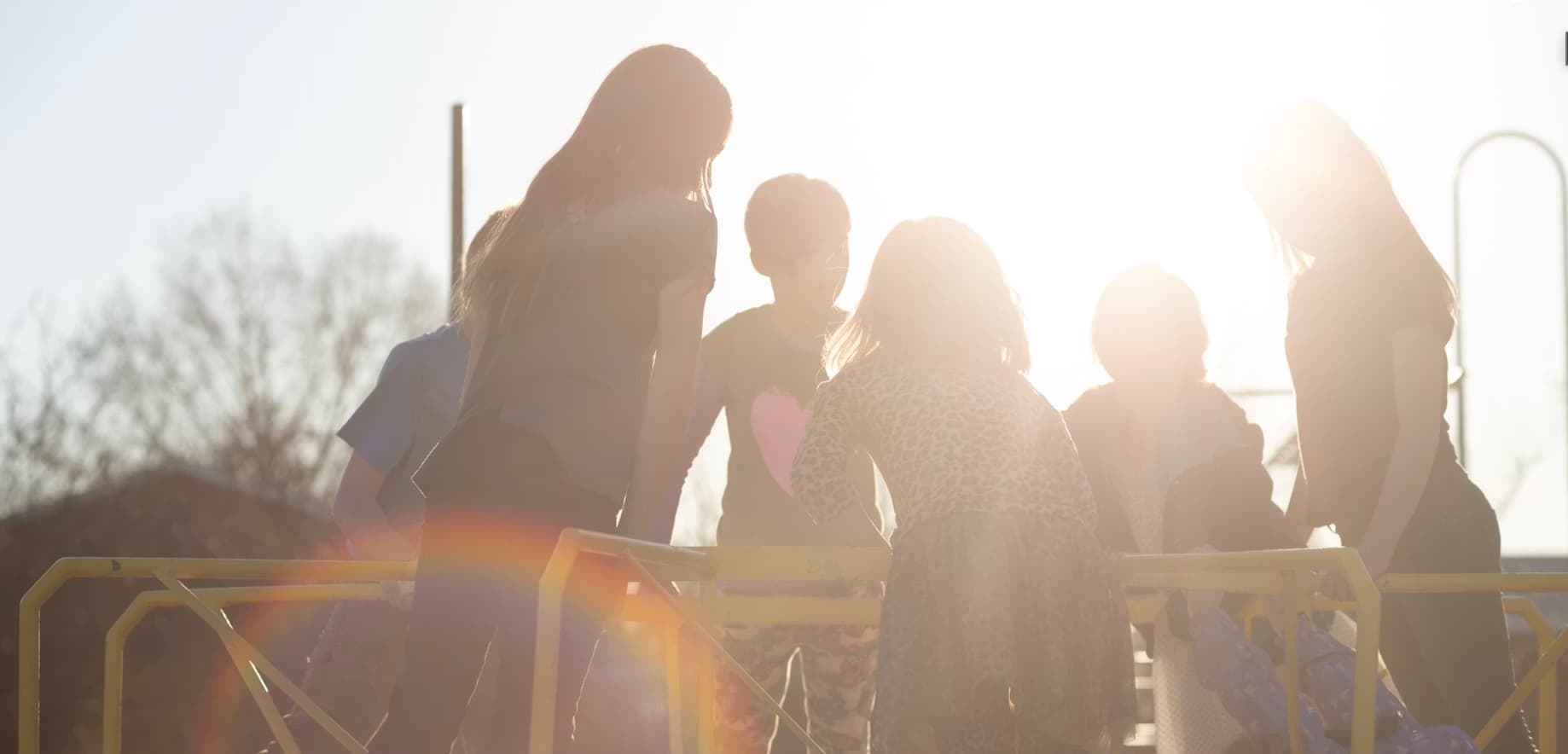
The first summer that feels planned
This summer is going to feel different to a lot of families, and mine is one of them. The government has now announced restrictions on social media for children under sixteen, expected to come into force in spring 2027, and I wrote about what that ban is likely to mean and what children actually lose when it arrives in an earlier piece on the coming ban. The school summer holidays begin a few weeks later, and for a great many households this will be the first time the long break gets planned deliberately around less screen time, whether because the law nudged them into it or because they had already decided quietly and were waiting for the right moment to begin.
Six weeks is a long stretch to fill, and the idea of a no phone summer can look daunting when you are standing at the front of it in July. The thing I have learned by doing this badly and then a little better is that the holidays are the easiest part of the year to change the default, because the routine is already broken and nobody is expecting the ordinary pattern of a school week. That gives you room to put something else in its place before anyone has decided what summer is supposed to look like.
Start with a conversation, not an announcement
The mistake I nearly made the first time we tried this was to hand it down like a rule. I had the speech half written in my head, all about how much time was too much and what the new limits were going to be, and I could see exactly how it would land, which was as a punishment for something my daughters had not actually done wrong. So I stopped and did it the other way around. I told them what we were going to do over the summer, the days out and the things we wanted to make and the places we wanted to go, and the smaller role for screens came out of that conversation rather than being the whole of it.
Children are far more willing to give something up when they can see what is arriving in its place, and far less willing when it feels like a thing being taken from them because an adult has decided they cannot be trusted. A screen free summer that is framed as a loss will be resented for six weeks. The same summer framed as a plan the whole family is in on, with the children helping to decide what goes in it, is a completely different thing to live inside.
Boredom needs somewhere to go
The single most useful thing I can tell you is that you cannot simply remove the screen and expect the space to fill itself with something better. A bit of boredom is genuinely good for children, but boredom needs somewhere to go or it will find its own way back to the nearest device within the hour. The job is not to police the time that opens up, but to have a loose sense of what could fill it, so that when a child drifts in and says they have nothing to do there is an honest answer waiting that is more appealing than a screen.
I have stopped trying to build a timetable, because a timetable for the holidays is a promise you break by the second week. What works better is having a small store of ideas grouped loosely around three things: making things, being outside, and slow connection. None of it needs to be elaborate and almost none of it costs very much.
Making things
There is a particular kind of calm that settles over a child who is properly absorbed in making something, and it is the closest thing I have found to the focus a screen pretends to offer without any of the cost. Baking is the obvious one and it has the advantage of producing something to eat at the end. Beyond that it is whatever your child already leans towards: building dens, painting, sewing, taking an old radio apart to see what is inside it, keeping a scrapbook of the summer. The best screen free activities for kids tend to be the ones that leave something behind, because a child who has made a real object has a reason to come back to it tomorrow.
Being outside
Outside does most of the work on its own, and you do not need a grand plan to get the benefit of it. A bike, a paddling pool, a patch of garden given over to growing something, a long walk somewhere with a stream to dam, an evening that runs late because nobody can find a reason to come in. We have a rough family rule that we try to get out of the house properly once a day during the holidays, even when the weather is doing its best to talk us out of it, and the days we manage it are reliably the better ones.
Slow connection
This is the part the holidays are quietly worst at, because the friends a child sees every day at school scatter for six weeks, and a new friend made on holiday vanishes the moment you drive away. The pull back towards a phone is strongest here, because connection is a real need and a screen is the easiest place to reach for it. The answer is not to pretend the need is not there, but to meet it at a slower pace, which is exactly where pen pals earn their place, and our parent's guide to pen pals for kids walks through how to start. A letter posted in July that comes back in August gives a child something to look forward to that is theirs alone, and it teaches the same patience a holiday friendship used to teach before the letters stopped getting written.
That losing touch is the exact problem I built Stamplo to solve, because I was tired of the addresses we took at the pool ending up in a drawer. Children write supervised letters to pen pals in other countries, parents approve every letter on both sides, and a friendship gets the slow thread it needs to survive past the end of the week, without the lost envelope and the stamp nobody could find. My eldest, who is ten, has been writing to a pen pal in Japan for about six months now, and a country that used to be an abstraction from books has slowly become somewhere she feels she knows. If you want to understand why a slower pace suits children this age, I wrote about that in a piece on why children need slower conversations.
A different default, not a ban at home
I want to be honest about what I am actually suggesting, because I am not describing a house with no screens in it and I would not trust my own advice if I were. There will be rainy afternoons that a film rescues, and evenings where everyone is tired and a bit of television is simply the kind thing to do, and none of that is a failure of the plan. A screen free summer in the sense I mean it is not a ban on screens in your own home. It is a change in what the day reaches for first.
The goal across the screen free summer holidays is a different default, where the screen is the thing you turn to occasionally and on purpose rather than the thing that fills every gap by gravity. A child who has spent the morning making something and the afternoon outside, and who has a letter on the way from a friend, does not need the screen in the same way, and that is the whole of it. You are not trying to win an argument with a device, only to make it a bit less interesting than everything else on offer.
What the summer is actually for
My daughters will make another friend this summer, somewhere, probably within a day of arriving. I have made my peace with the fact that most of those friendships were always going to be brief, but I would like at least one of them to last longer than the drive to the airport, and the only way I know to give it that chance is to slow the whole thing down and put a thread back between two children who liked each other. What a screen free summer is really for is not the absence of the screen, which nobody will remember, but the things that grow in the space where it used to be.
Looking for a calmer way for your child to connect this summer?
Stamplo is a parent-supervised pen pal platform for children aged 7–14. No feeds, no algorithms, no notifications. Every letter is approved by parents on both sides before delivery.
Start Free — Create Your Family Account